Recruit a worker you have already selected
Already identified a suitable worker? Use the named-worker route. Involvement of a Bangladeshi recruiting agency is optional for documentation support.
 MoEWOE
Funded by the European Union. Views and opinions expressed are those of the author(s) only and do not necessarily reflect those of the European Union. Neither the European Union nor the granting authority can be held responsible for them.
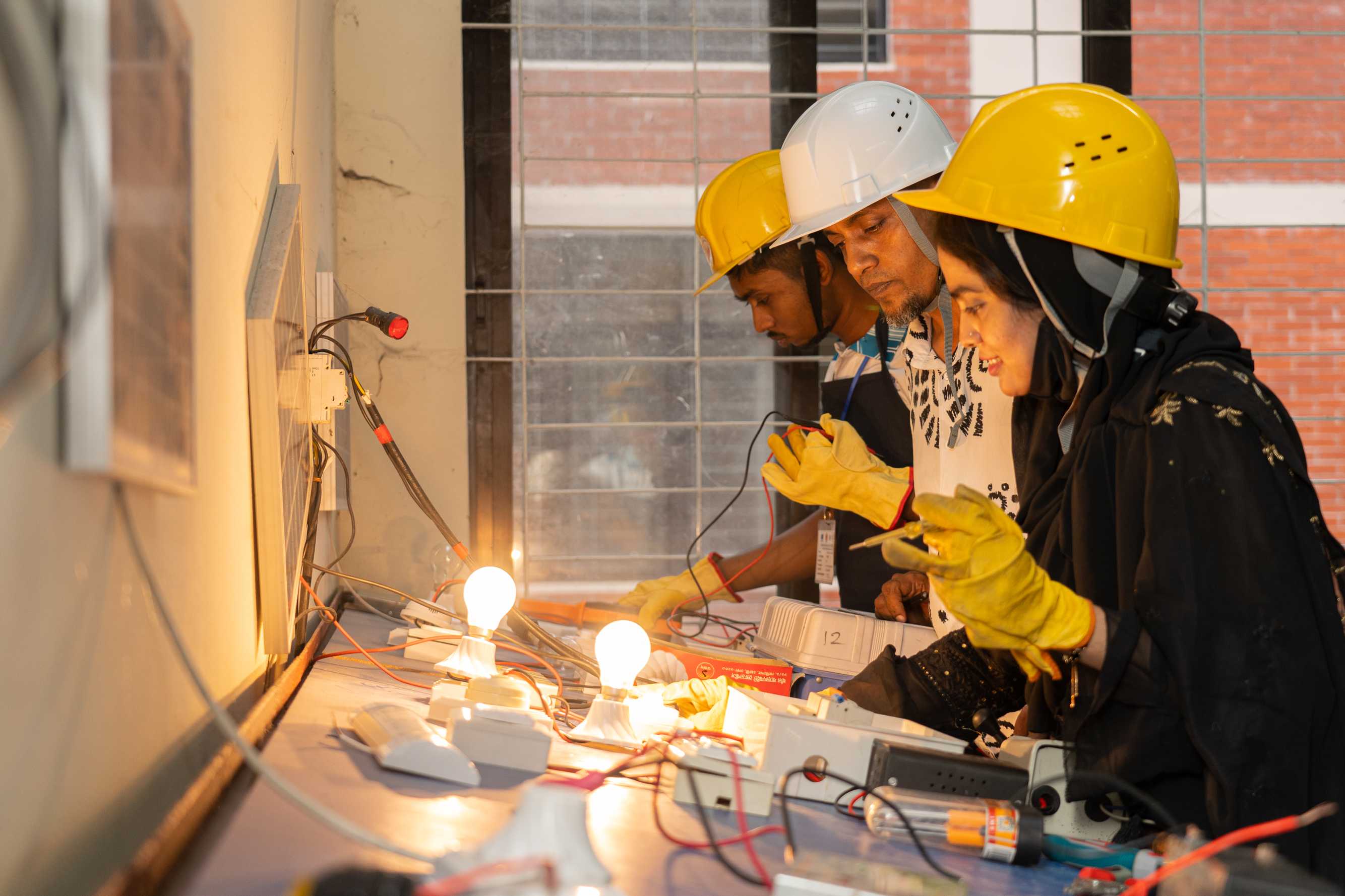
The Talent Partnership offers EU employers a reliable and ethical mobility pathway to recruit skilled workers from Bangladesh to work in occupations in demand in EU member states. It addresses labour shortages while ensuring full compliance with the EU and international labour standards.
Recruitment under this framework is quality-driven, transparent, and risk-mitigated. Skilled workers are trained, oriented and independently assessed while in Bangladesh. Recruitment is digitally monitored, and all actors operate within a regulated system.
Already identified your workers, or need help finding suitable candidates? Explore the recruitment options below.
Under Bangladesh law, recruitment services for overseas employment must be provided by authorised public-sector bodies or licensed recruiting agencies. Employers can work with:
The role of the recruitment partner depends on the route used. Workers who secure employment directly may apply to BMET for emigration clearance without engaging a recruiting agency, subject to the applicable requirements.
Whichever route an employer chooses, candidates who come to them through the Talent Partnership carry an additional layer of assurance. The International Labour Organization (ILO) builds this layer together with the Ministry of Expatriates’ Welfare and Overseas Employment (MoEWOE) and its agencies, with funding from the European Union (EU). Bangladesh is one of the world’s largest suppliers of skilled and semi-skilled labour, with a young workforce and decades of experience in construction, manufacturing, shipbuilding, hospitality and care. Bangladeshi workers have built a reputation across Asia, the Gulf and increasingly in Europe for diligence, punctuality and a willingness to learn on the job. What has often been missing is a reliable way for a European employer to verify, before hiring, that a worker’s skills match the job. The Talent Partnership closes that gap. Employers no longer take a chance on a certificate they cannot read. They receive candidates whose skills have been trained, tested and recorded against standards they already recognise.
Occupational standards under this initiative are mapped against EU-aligned competency requirements, and for the Italy corridor they are mapped against the Italian Atlante del Lavoro e delle Qualificazioni, using its Settori Economico-Professionali (SEP) and Aree di Attività (ADA) classifications. You therefore know exactly what a Bangladeshi certificate means in Italian terms before you shortlist anyone. Share your job description with us at admin@admin.com and we will help you match it to the right occupational profile and the right candidates.
Workers train at partner institutes selected through a rigorous joint process by an assessment team made up of the ILO, the Government of Bangladesh and the EU, so training quality is checked before a single candidate enrols. Workers are then assessed against National Competency Standards set by the National Skills Development Authority (NSDA), which are levelled under the Bangladesh National Qualifications Framework (BNQF). The BNQF is the national system that places each qualification at a defined level of competence, which is what makes comparison with European frameworks possible. Assessment takes place at accredited centres with certified assessors, and every result is recorded on the Overseas Employment Platform (OEP), where you can view candidate profiles after you register. Register as an employer.
The project applies the ILO General Principles and Operational Guidelines for Fair Recruitment, together with the ILO definition of recruitment fees and related costs. In practice this means the employer pays, and the worker pays nothing. No recruitment fee, no related cost, no debt on arrival. For companies in the EU, this matters well beyond ethics. The EU Forced Labour Regulation will bar products made with forced labour from the single market, and corporate sustainability due diligence obligations are moving steadily down the supply chain. Recruitment debt is one of the most common triggers of a forced labour finding. By recruiting through this corridor, a company obtains documented, traceable evidence that its labour supply chain starts clean. Large employers and their suppliers can use that evidence directly in their own due diligence reporting, and can show buyers, investors and auditors a sourcing route that stands up to scrutiny. Few labour corridors anywhere can offer the same.
Candidates complete more than 300 hours of Italian language training and 60 hours of pre-departure orientation in Bangladesh, before arrival. They reach your workplace able to follow instructions, understand safety rules and settle in quickly, rather than spending the first months learning how to function.
A complaint mechanism operates throughout the process, from training to placement. Issues surface early, while they can still be resolved, instead of becoming a problem on your shop floor or a story in the press.
The ILO does not recruit or place workers, does not select candidates on behalf of employers, and does not endorse any individual recruiting agency. Its role is to strengthen the national system and to set the standards that candidates under this initiative meet.
For guidance on the appropriate recruitment route or assistance in contacting BMET, BOESL or a licensed private recruiting agency, please contact us.
Already identified a suitable worker? Use the named-worker route. Involvement of a Bangladeshi recruiting agency is optional for documentation support.
Tell BMET, BOESL or a licensed Bangladeshi private recruiting agency which skills you need and how many workers you wish to recruit. Candidates are selected through the applicable recruitment process.
A special arrangement may allow recruitment without Bangladesh Mission attestation. Government approval and a recruitment agency are still required. Availability must be confirmed for your destination country.
Prepare the job order or employment contract, the worker’s identity and travel documents, and any required Mission attestation or Government approval. Confirm the current document requirements with BMET.
The worker applies to BMET for emigration clearance. The Bangladesh Mission handles attestation where required; a licensed recruiting agency may provide optional documentation support.
BMET — confirm clearance and documentation requirements.
Prepare the employer’s recruitment demand (including skills and worker numbers), job orders and employment terms, and worker documents required by the agency. Recruitment permission and any required Mission attestation or Government approval must be confirmed with the responsible authority.
BMET, BOESL or a licensed private recruiting agency manages the applicable selection and recruitment process. The agency applies for workers’ emigration clearance; BMET and the Bangladesh Mission handle the applicable approvals.
BMET, BOESL and the RAIMS agency list can help you identify the appropriate recruitment partner.
Prepare the employer’s recruitment demand, the selected workers’ job orders and employment documents, and the Government approval. Confirm that the arrangement is available for your destination country and verify the current requirements before proceeding.
A licensed recruiting agency is required and applies for workers’ emigration clearance. The responsible Government authority must approve the arrangement; the agency or BMET can confirm destination-country availability.
For every route: Workers must register on OEP, complete the required pre-departure orientation and obtain BMET emigration clearance. Destination-country visa and work permit requirements also apply.
Not sure which route applies? Contact Us.
Follow the step-by-step pathway for recruiting skilled Bangladeshi workers through the Overseas Employment Platform (OEP), from employer registration and job orders to candidate selection, recruitment agency engagement, visa and emigration processing, and arrival. Explore the available public and private recruitment routes, employer responsibilities, and fair recruitment requirements.
Employers Info Package English PDF |
Employers Info Package Italian PDF
Explore standard qualifications maps approved under Bangladesh National Skills Development Authority (NSDA) rules and aligned with EU expectations. Search specific titles or filter by levels.
Try adjusting your keyword search or level filter.
Read inspiring stories from individuals who have successfully participated in the EU-Bangladesh Talent Partnership programme.
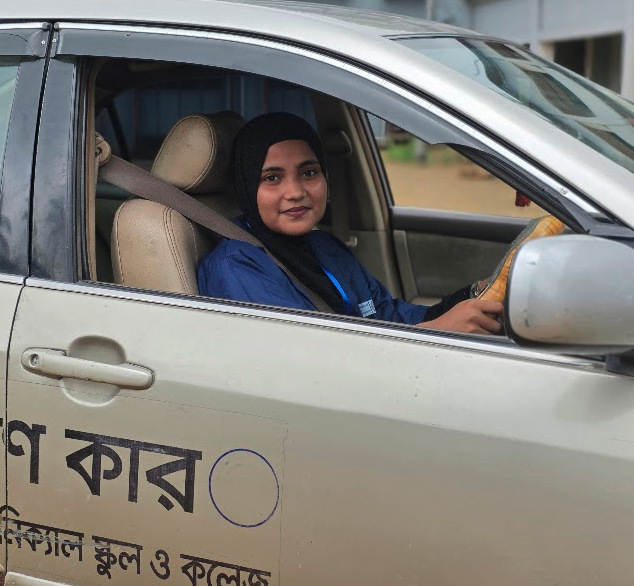
Meet PapiaPapia Akter, 31, is one of the top performers among our 120 driving graduates. She completed her Level 3 certification in Professional Driving under the Bangladesh Nation...

Meet SumaiyaSumaiya Khatun, 26, chose caregiving because she spent two years caring for her grandmother at home. Today she is a certified professional. She completed her Level 3 ce...

Meet Rakibul Rakibul Hasan, 28, has worked with electricity since he was a teenager, helping in his uncle's workshop. He turned that early interest into a formal q...





Find key instructions on registration processes for potential migrants and overseas business entities.
The Bangladesh–EU Talent Partnership is a cooperation initiative between the Government of Bangladesh and the European Union to support safe, regular, and skills-based labour migration. It aims to help skilled Bangladeshi workers access legal employment opportunities in European Union countries through fair recruitment, skills training, certification, language preparation, and official migration procedures.
The initiative is supported by the Talent Partnership Project, funded by the European Union and implemented by the International Labour Organization (ILO) in collaboration with the Ministry of Expatriates’ Welfare and Overseas Employment (MoEWOE).
Yes. This website is managed under the authority of the Ministry of Expatriates’ Welfare and Overseas Employment (MoEWOE), Government of Bangladesh. It provides official information on skills-based labour migration, the Overseas Employment Platform (OEP), training, recruitment procedures, worker protection, and employer engagement.
No. Accessing this website and registering on the Overseas Employment Platform (OEP) are free. You should not pay anyone to create a profile, update information, or access information through this website. If anyone asks for money to register you on OEP or promises a job in exchange for payment, please verify the information through official government channels before taking any action.
Access official portals to register under the EU-Bangladesh mobility pathways. Register as an individual candidate or a European partner employer.
Register as an aspiring migrant to seek employment in Europe. Complete your skills profile, apply for RPL competency assessments, and participate in target language orientation programs.
Register as an EU-based employer seeking verified, skilled workers. Gain secure credentials to submit hiring demand lists, verify criteria compliance, and browse anonymized candidate rosters.
Have questions about the pilot program or need technical assistance? Fill out the form below.
Your inquiry request has been successfully recorded.